
Understanding Your Leather Sofa

When someone asks, \”How can I clean my leather sofa?\”, the first thing I ask back is — What type of leather is it? Not all leathers are the same, and using the wrong method can cause discoloration, cracks, or permanent texture damage.
Common Types of Leather Used in Sofas
| Leather Type | Look and Feel | Durability Level | Cleaning Sensitivity |
|---|---|---|---|
| Aniline | Soft, natural grain, rich color variations | Low (stains easily) | Very sensitive |
| Semi-Aniline | Slightly coated, more uniform color | Moderate | Sensitive |
| Protected/Pigmented | Smooth, finished surface, even coloring | High | Less sensitive |
| Bonded Leather | Made from leather scraps + polyurethane | Moderate to low | Can peel/crack |
How Leather Type Affects Cleaning
- Aniline leather is porous and absorbs spills quickly. It needs gentle, specialized cleaners and minimal moisture.
- Semi-aniline leather tolerates mild leather solutions but still requires pH-balanced products.
- Protected or pigmented leather is more forgiving — light soap solutions can be used, but harsh scrubbing still damages the finish.
- Bonded leather should never be saturated with liquid; clean with slightly damp cloths and avoid strong detergents.
Why the Wrong Method Can Ruin Leather
Leather is a natural material, and each surface finish reacts differently to moisture, pH levels, and abrasives. The wrong cleaner or too much water can:
- Dry out the fibers, causing cracks
- Strip protective coatings, exposing raw leather
- Cause fading or blotches in the color
- Weaken adhesives in bonded leather, leading to peeling
The safest way to clean depends on knowing your leather type first — and always pairing it with the correct product and technique.
Essential Preparation Before Cleaning a Leather Sofa

Before you start cleaning your leather sofa, it’s important to set yourself up with the right tools and steps. Leather can be sensitive, and using the wrong products or skipping prep work can do more harm than good.
Gather the Right Cleaning Materials
For safe and effective cleaning, have these ready:
- Soft, lint-free cloths or microfiber towels – for dusting and wiping
- pH-balanced leather cleaner or a mild soap solution (avoid harsh detergents)
- Leather conditioner recommended for your sofa type
- Vacuum with a soft brush attachment
- Small bowl of clean water for rinsing cloths
If you want a more eco-friendly approach, a diluted mix of mild dish soap and water can work, but make sure it’s gentle and low-alkaline.
Do a Spot Test First
Leather types vary, and even “protected” leather can react to certain cleaners.
- Pick a hidden spot, like the back edge or under a cushion.
- Apply your cleaner lightly with a soft cloth.
- Wait a few minutes to see if the leather changes color, darkens, or feels sticky.
- If there’s no reaction, it’s safe to move forward.
This quick step prevents a small mistake from becoming visible damage.
Remove Dust and Debris First
You never want to rub dirt into the leather while cleaning — it can cause scratches.
- Vacuum your sofa using the soft brush attachment.
- Pay extra attention to seams, creases, and under cushions where dust collects.
- Wipe the surface with a dry microfiber cloth to lift any remaining particles.
Clearing dust first makes the cleaning process more effective and keeps the leather’s surface smooth.
Step by Step Guide on How to Clean a Leather Sofa
Cleaning a leather sofa the right way helps it last longer and keeps it looking great. Here’s a clear, straightforward process you can follow at home.
Step 1 Wipe Down with a Dry Microfiber Cloth
Start by removing surface dust and loose dirt with a clean, dry microfiber cloth. This keeps dirt from scratching the leather when you apply cleaner.
- Work in gentle, sweeping motions.
- Don’t press too hard—just enough to lift dust and crumbs.
Step 2 Use a Mild Leather Cleaner or Diluted Soap Solution
Choose a pH-balanced leather cleaner or mix a few drops of mild, fragrance-free liquid soap in a bowl of distilled water.
- Avoid all-purpose cleaners, bleach, ammonia, or alcohol—they dry and damage leather.
- Lightly dampen a clean cloth with the solution (never soak the leather).
Step 3 Apply Cleaner with a Soft Cloth
Wipe the sofa using small circular motions to lift dirt without scrubbing harshly.
- Clean one section at a time so the cleaner doesn’t dry on the surface.
- Always wring out excess water from your cloth to prevent soaking.
Step 4 Remove Residue with a Damp Cloth
After cleaning, wipe away any soap or cleaner residue with a new cloth lightly dampened with plain water.
- This step prevents streaks and drying marks.
- Make sure the cloth is just damp, not wet.
Step 5 Dry in a Well Ventilated Area
Let your sofa air-dry naturally in a cool, shaded spot.
How to Treat Common Stains on Leather Sofas
Even if you’re careful, accidents happen. The key with cleaning a leather sofa is to act quickly and use the right approach for each type of stain. Different stains need different methods, and using the wrong one can make things worse. Here’s how to safely handle the most common ones.
Removing Ink Stains from Leather
Ink is one of the trickiest stains on leather, so timing matters.
- Act fast. The longer it sits, the harder it’ll be to remove.
- Lightly dab (don’t rub) with a cotton swab dipped in rubbing alcohol or a leather-safe ink remover.
- Blot the area gently until the ink lifts, then wipe with a damp, clean cloth.
- Always condition the leather afterward to prevent drying or discoloration.
Cleaning Food and Drink Stains
Food and drink spills are common, especially in homes with kids or gatherings.
- Blot spills right away with a soft, absorbent cloth—avoid pressing the liquid deeper into the cushions.
- Mix a few drops of mild pH-balanced soap with warm water.
- Lightly dampen a cloth in the solution and gently wipe the spot.
- Rinse with a clean damp cloth to remove soap residue, then let it air-dry.
Grease and Oil Stain Removal
Leather absorbs oil quickly, so you need to lift it before it sets.
- Gently blot (do not rub) with a dry cloth to absorb as much as possible.
- Sprinkle cornstarch or baking soda over the stain and let it sit for a few hours to pull the oil out.
- Brush or vacuum away the powder.
- Follow up with a light clean using a mild leather cleaner if needed.
Dealing with Pet Stains and Odors
Pet accidents can leave both stains and smells behind.
- Blot liquid immediately to minimize absorption.
- Use a leather-safe enzymatic cleaner to break down odor-causing bacteria.
- Wipe the area clean with a damp cloth and let it dry naturally.
- Follow up with a leather conditioner to keep it soft and supple.
Pro tip: Always spot test any cleaner on a hidden area before using it on visible parts of your sofa. This can save you from discoloration or damage.
Leather Conditioning and Maintenance Tips
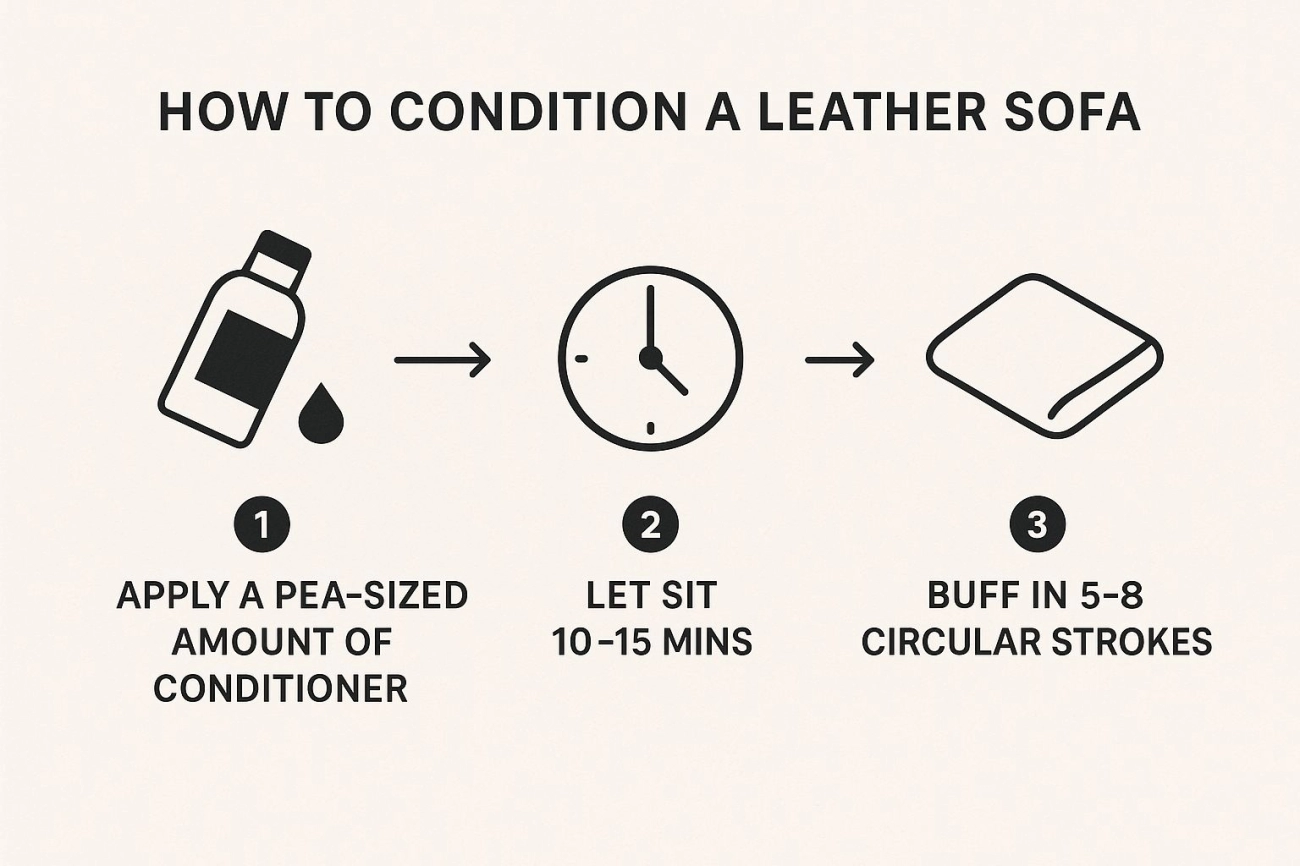
Keeping your leather sofa in good shape isn’t just about cleaning — conditioning is what keeps it soft, supple, and looking new. Over time, leather loses its natural oils, which can lead to cracks, stiffness, and fading if it’s not maintained. Here’s how to take care of it the right way.
Importance of Regular Conditioning
- Prevents cracking and drying: Leather needs moisture, much like skin. Without conditioning, it can dry out and lose flexibility.
- Keeps the color rich: Conditioning helps maintain the sofa’s finish and prevents uneven fading.
- Extends the life of your sofa: Proper care can make a quality leather sofa last decades.
Formo Furniture recommends using a pH-balanced, high-quality leather conditioner, specifically formulated for furniture — not for car interiors or apparel.
How Often to Condition a Leather Sofa
How often you condition depends on your sofa’s environment, use, and type of leather:
| Usage & Environment | Suggested Conditioning Frequency |
|---|---|
| Normal household use | Every 6–12 months |
| Dry climates / homes with heating or AC use year-round | Every 3–6 months |
| High-traffic use (kids, pets, daily lounging) | Every 3–4 months |
Tip: If the sofa feels slightly rough or looks a bit dull, that’s a sign it’s ready for conditioning.
Avoid Harsh Chemicals and DIY Cleaners
Many household products and “natural” DIY mixes can harm leather. Avoid:
- Vinegar: Too acidic, can strip natural oils.
- Baby wipes: May contain alcohol or ammonia.
- All-purpose cleaners: Often too harsh and damaging to the finish.
- Olive oil or coconut oil: Can leave sticky residue and cause long-term staining.
Instead, stick with furniture-grade leather care products, like those specifically recommended by Formo Furniture. They’re tested to nourish leather without weakening its protective coating.
Quick Conditioning Steps
- Clean first: Always remove dust and dirt before applying conditioner.
- Use a soft, lint-free cloth.
- Apply sparingly: A thin, even coat is better than soaking the leather.
- Let it absorb for several hours or overnight.
- Buff lightly with a dry cloth to restore the sheen.
Preventive Measures for Leather Sofa Longevity

Taking care of your leather sofa isn’t just about cleaning—it’s also about preventing damage before it happens. A few simple habits can make your sofa look newer for years and cut down on costly repairs.
Keep Away from Sunlight and Heat Sources
Leather can dry out, fade, and crack if exposed to direct sunlight or heat vents for long periods.
- Best placement: Keep your sofa at least 2–3 feet away from radiators, fireplaces, and heating vents.
- If it must be near a sunny window, use curtains, blinds, or UV-protective window film to block direct rays.
Use Covers and Cushions to Reduce Wear
Daily use can cause spots where the leather fades or smooths out faster.
- Add removable throws, sofa covers, or decorative cushions in high-use areas to protect against friction.
- Rotate cushions and throws often to spread out wear evenly.
Regular Dusting and Fast Spill Cleanup
Dust and spills left alone can damage leather over time.
- Dust weekly with a dry, soft microfiber cloth to keep dirt from settling into the surface.
- For spills, blot immediately—never rub. Use a clean, dry cloth first, then a slightly damp one if needed.
- Avoid harsh chemicals or household cleaners, as they can strip away protective finishes.
By building these habits into your routine, you’ll prevent early wear and maintain that soft, supple leather feel. For more in-depth cleaning steps, you can check our leather sofa cleaning tips for a safe and simple process.
When to Call in Professional Leather Cleaning Services

Even with regular care, there are times when your leather sofa needs professional attention. Knowing the signs can save your furniture from permanent damage and extend its life.
Signs Your Leather Sofa Needs Professional Cleaning
Look out for these common indicators:
- Deep stains that don’t come off with gentle home cleaning.
- Cracking, peeling, or fading on the leather surface.
- Uneven color patches or discoloration caused by sun exposure or spills.
- Persistent odors that don’t go away after cleaning.
- Stiff, dry leather that no longer feels soft and supple.
- Built-up grime in seams and stitching that’s hard to reach.
If you notice any of these, DIY methods may not be enough—and using the wrong products can make things worse.
Benefits of Professional Leather Cleaning with Formo Furniture
Formo Furniture offers specialized leather cleaning and restoration that goes beyond basic cleaning:
| Service | Benefit |
|---|---|
| Expert stain removal | Safely removes ink, grease, and set-in stains without damage. |
| Deep conditioning | Restores softness and protects leather from cracking. |
| Color touch-up | Fixes faded or uneven color for a fresher look. |
| Odor treatment | Eliminates stubborn smells from pets, food, or spills. |
| Protective finish | Adds a barrier against future stains and wear. |
With professional-grade tools, pH-balanced cleaners, and restoration techniques, they can revive leather that’s been neglected for years, keeping it looking and feeling like new.
FAQs About Cleaning Leather Sofas
Can I use household cleaning products on a leather sofa
No — avoid using regular household cleaners like bleach sprays, ammonia-based products, or abrasive powders on leather. These can strip the natural oils, dry out the surface, and cause cracking or color fading. Instead:
- Use a pH-balanced leather cleaner specifically designed for furniture.
- For light cleaning, a mix of distilled water and mild liquid soap (like baby soap) can work, but always spot-test first.
- Stay away from vinegar and DIY internet hacks that aren\’t approved for leather.
How often should I clean my leather sofa
A good routine keeps your sofa looking new for years:
- Dust or vacuum every 1–2 weeks to prevent dirt buildup.
- Deep clean every 2–3 months with a mild leather cleaner.
- Condition every 6–12 months (more often if your home is dry or the sofa is in direct sunlight).
Is it safe to steam clean a leather sofa
No — steam cleaning is not safe for leather. The moisture and high heat can damage the finish, shrink the material, and cause permanent warping. If you need a deep clean and your sofa has stubborn stains:
- Stick to manual cleaning with soft cloths.
- For serious buildup or damage, call a professional leather cleaning service — they use low-moisture, safe cleaning techniques designed for leather.
 English
  Arabic
  Swedish
  Portuguese
  Dutch
Dutch  German